


People who save money differently do not clip coupons or skip morning coffee. They do not follow the tired advice recycled across every personal finance blog since 2010. Instead, they have rewired how they think about earning, spending, and keeping money in ways that quietly separate them from the majority who struggle to build any financial cushion at all.
The numbers paint a stark picture. According to Bankrate’s 2026 Emergency Savings Report, 60 percent of Americans are uncomfortable with their current level of emergency savings. Nearly one in four adults have no emergency savings whatsoever. Meanwhile, 51 percent of the country lives paycheck to paycheck, according to Ramsey Solutions’ State of Personal Finance report.
Yet within this landscape, a distinct group consistently builds wealth without earning dramatically more than everyone else. The difference is not income. The difference is behavior. People who save money differently have adopted unconventional habits rooted in psychology, intentionality, and a willingness to reject mainstream financial wisdom when it stops serving them.
This article unpacks nine of those habits, backed by behavioral research and real-world financial data, that separate consistent savers from everyone else.

They Automate Savings Before They See a Paycheck
The single most effective habit among people who save money differently is removing the decision from the equation entirely. Rather than waiting until month’s end and transferring whatever remains, they set up automatic transfers that move money into savings the moment income arrives.
This is not a new concept, but the execution matters more than most realize. Behavioral economists have long studied what they call the “pay yourself first” principle, and the data supports it overwhelmingly. The Consumer Financial Protection Bureau recommends automating savings contributions as one of the most reliable strategies for building an emergency fund, regardless of income level. [LINK: https://www.consumerfinance.gov/an-essential-guide-to-building-an-emergency-fund/ on “Consumer Financial Protection Bureau”]
The psychology behind automation is simple. When money is visible in a checking account, the brain treats it as available to spend. When it vanishes before a person ever sees it, there is no internal negotiation, no willpower required, and no guilt. The savings happen silently, and the spending adjusts naturally to whatever remains.
Financial advisors have noted that people who automate savings are significantly less likely to dip into their reserves for non-emergencies. The act of labeling an account with a specific name, such as “Emergency Reserve” or “Freedom Fund,” further reinforces the psychological barrier against casual spending.
People Who Save Money Differently Save for Freedom, Not Emergencies
Most financial advice frames saving as a defensive act. Build a safety net. Prepare for disaster. Cover unexpected expenses. While all of that is valid, people who save money differently tend to flip the framing entirely. They save because doing so purchases something money cannot directly buy: freedom.
Morgan Housel, author of The Psychology of Money, makes a compelling case that the highest form of wealth is the ability to wake up and control how time is spent. That kind of autonomy over personal time is the hidden dividend of consistent saving. It is not about hoarding cash. It is about accumulating options.
This reframing changes behavior in measurable ways. When saving is tied to aspiration rather than anxiety, the habit sticks. A person saving for “the ability to quit a toxic job without panic” is far more motivated than someone saving because a financial blog told them to have three months of expenses tucked away. The former is emotionally resonant. The latter is homework.
For those navigating how to escape financial traps like EMIs and debt cycles, this mindset shift is foundational. Debt traps shrink when the motivation to save expands beyond mere survival.
They Track Spending Without Budgeting
This one surprises people. Conventional wisdom insists that a detailed budget is the foundation of financial health. Yet many people who save money differently have abandoned rigid budgets in favor of something simpler: tracking where money goes without restricting where it can go.
The distinction is subtle but important. Budgeting prescribes limits. Tracking raises awareness. For many savers, simply reviewing spending patterns once a week reveals waste that a spreadsheet never could. Subscriptions accumulate quietly. Delivery fees add up. Small purchases compound into significant monthly totals that would have gone unnoticed without conscious review.
Research from behavioral finance supports this approach. The status quo bias, a well-documented cognitive tendency, keeps people locked into existing spending habits even when better alternatives exist. Tracking disrupts that bias by making invisible patterns visible. Once a person sees that delivery orders consumed four hundred dollars last month, the adjustment happens organically. No willpower required. No deprivation involved.
This method works especially well for people who have tried and failed at traditional budgeting. The rigidity of assigning every dollar a category often breeds resentment and rebellion spending. Tracking, by contrast, invites curiosity instead of restriction.
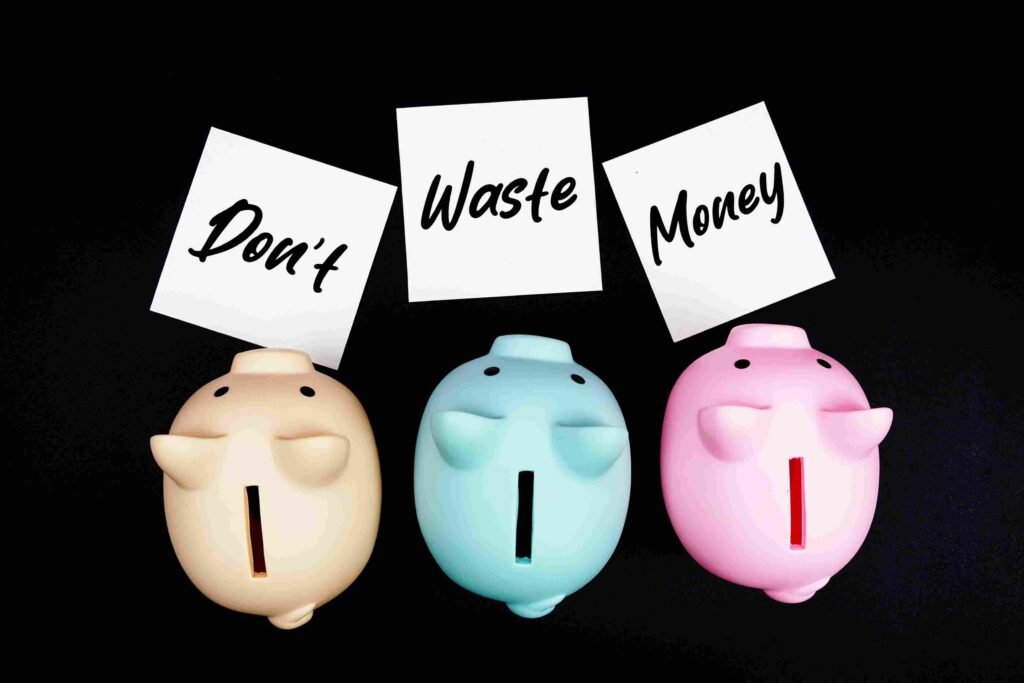
They Treat Windfalls as Acceleration, Not Celebration
Tax refunds, work bonuses, unexpected gifts, and side-income bursts represent some of the most powerful wealth-building moments in a person’s financial year. Yet most people treat them as permission to spend. People who save money differently treat windfalls as accelerants.
The approach is not about denying every pleasure. The most sustainable version of this habit involves a simple split: allocate a small percentage of the windfall for enjoyment and redirect the majority toward savings, debt reduction, or investment. Rather than spending an entire work bonus, experienced savers carve out a small treat and channel the rest toward eliminating a loan or boosting an emergency reserve, ultimately freeing up monthly cash flow for long-term wealth building.
The average American tax refund often exceeds two thousand dollars. Redirecting even half of that into an emergency fund would bring millions of households closer to the three-to-six-month savings target that financial experts consistently recommend. The math is straightforward. The psychology of actually doing it separates unconventional savers from everyone else.
People Who Save Money Differently Understand Lifestyle Creep
Lifestyle creep is the gradual, almost imperceptible increase in spending that accompanies rising income. A raise arrives. A promotion lands. And within months, the new income has been absorbed by upgraded subscriptions, better restaurants, a nicer apartment, and the vague sense that all of it is deserved.
People who save money differently recognize lifestyle creep as the single biggest threat to long-term wealth. Not market crashes. Not bad investments. Not even inflation, which Bankrate reports has caused 54 percent of Americans to save less for emergencies. The quiet expansion of monthly expenses eats more wealth than any economic downturn. [LINK: https://www.bankrate.com/banking/savings/emergency-savings-report/ on “Bankrate reports”]
The counter-strategy is deceptively simple. When income rises, savings rates rise first. The lifestyle gets whatever is left over, not the other way around. A ten percent raise does not mean ten percent more spending. It means the savings rate climbs from, say, fifteen percent to twenty, and the remaining increase funds whatever upgrade feels genuinely meaningful.
This principle connects directly to building the key skills that drive career and financial success. Professional growth should fund financial security before it funds lifestyle expansion.
They Use the 72-Hour Rule for Non-Essential Purchases
Impulse spending is a well-documented drain on household finances. Retailers and online platforms have engineered entire experiences around reducing the friction between desire and purchase. One-click buying, flash sales, and algorithmically timed notifications exist for one reason: to compress the gap between impulse and action.
People who save money differently have developed a reliable countermeasure. Before any non-essential purchase above a personal threshold, usually somewhere between fifty and one hundred dollars, they wait 72 hours. No exceptions. No rationalizations.
The psychology behind this is well established. Research into present bias and spending behavior shows that the intensity of a purchasing impulse drops significantly with time. After three days, most non-essential purchases no longer feel necessary. The item stays in the cart. The desire fades. The money stays in the account.
This habit does not require deprivation. If the desire persists after 72 hours, the purchase happens guilt-free. The rule simply filters out the noise of impulsive spending, which research suggests accounts for a meaningful percentage of discretionary household budgets each year.
They Talk About Money Without Shame
Financial secrecy is a cultural default in most households. Money is the last taboo, more uncomfortable to discuss than politics, health, or even death in many families. Yet people who save money differently tend to break this pattern deliberately.
Research has shown that up to 40 percent of adults hide accounts, debts, or spending habits from their partners. This financial secrecy damages not only bank balances but also the health of relationships themselves. Couples who discuss money openly, even when the conversations are uncomfortable, tend to align on financial goals and hold each other accountable for progress. [INTERNAL LINK: https://lifoholic.com/quiet-divorcing-the-silent-way-relationships-end-without-a-breakup/]
The concept of “loud budgeting,” popularized on social media, represents this shift toward financial transparency. Rather than pretending to afford every dinner out or weekend trip, people openly communicate their financial boundaries. The result is less social spending pressure, stronger friendships built on honesty, and more money left over for things that genuinely matter.
According to Ramsey Solutions, 56 percent of married couples never had a serious conversation about money before marriage. Among those who do discuss finances regularly, satisfaction with personal finances is significantly higher. Transparency does not guarantee wealth, but secrecy almost guarantees financial friction.

They Build Multiple Savings Layers, Not One Account
The conventional advice is straightforward: build an emergency fund. Three to six months of expenses. One account. Done. People who save money differently take a more nuanced approach. They create multiple savings layers, each serving a distinct purpose.
A typical structure might look like this. The first layer is a small, immediately accessible cash buffer of one thousand dollars for minor surprises. The second layer is a larger emergency fund covering three to six months of expenses, held in a high-yield savings account. The third layer is a “freedom fund” dedicated to opportunities, whether that means leaving a job, moving cities, starting a business, or taking an extended break.
This layered approach solves a problem that single-account strategies cannot. When everything sits in one fund, every withdrawal feels like a failure. Dipping into the emergency fund for a car repair creates anxiety even though that is exactly what the fund exists for. Separate layers allow guilt-free withdrawals from the appropriate tier while protecting long-term reserves.
Vanguard’s research supports this strategy, noting that even two thousand dollars in an accessible emergency fund can be as psychologically powerful as having significantly larger assets locked in investments. The confidence of knowing immediate needs are covered changes decision-making across every other financial category.
People Who Save Money Differently Invest in Financial Literacy
The final habit that separates people who save money differently from the mainstream is an ongoing investment in financial education. Not a single book read once. Not a podcast binged during a motivated week. A sustained, continuous engagement with financial concepts that evolves alongside life circumstances.
Financial psychologist Dr. Brad Klontz has identified four dominant “money scripts” — unconscious beliefs about money formed in childhood — that quietly drive adult financial behavior. These scripts include money avoidance, money worship, money status, and money vigilance. Three of the four associate strongly with lower income and wealth accumulation. Without awareness of these patterns, even high earners can find themselves trapped in cycles of overspending or under-saving.
Understanding cognitive biases like loss aversion, anchoring, and hyperbolic discounting gives unconventional savers an edge. They recognize when a “sale” is manipulating their sense of value. They understand why a large round number in a savings account feels less motivating than a series of smaller milestones. They know that the pain of financial loss weighs roughly twice as heavily as the pleasure of equivalent gains, and they structure their habits accordingly.
For anyone looking to deepen this understanding, exploring how daily lifestyle habits shape overall well-being offers an interesting parallel. The same consistency that builds healthy skin builds healthy finances. Small, daily, unglamorous actions compound over time into results that look effortless from the outside but required discipline from within.
5 Books That People Who Save Money Differently Swear By
Building unconventional saving habits often starts with a single book that shifts how money is perceived entirely. These five titles, all available on Amazon, have shaped how millions of people think about wealth, spending, and financial freedom. Each one approaches the topic from a different angle, and together they cover the full spectrum of mindset, systems, and daily behavior.
- The Psychology of Money by Morgan Housel — This is the book most frequently cited by unconventional savers. Housel argues that financial success has less to do with intelligence and everything to do with behavior. The book explores why two people with identical incomes can end up in vastly different financial positions based purely on how they think about risk, patience, and compounding. It reframes wealth as a byproduct of habits, not earnings.
- I Will Teach You to Be Rich by Ramit Sethi — Sethi takes a systems-first approach to personal finance. Rather than obsessing over cutting lattes, the book shows readers how to automate savings, investing, and bill payments so that financial progress happens without daily willpower. The tone is direct and practical, making it especially effective for beginners who have never set up a financial system before.
- Your Money or Your Life by Vicki Robin and Joe Dominguez — This classic reframes every purchase as a trade of life energy. The central question it asks is devastating in its simplicity: how many hours of work did this item cost, and was it worth trading those hours of life for it? People who save money differently often point to this book as the moment their relationship with spending changed permanently.
- The Richest Man in Babylon by George S. Clason — Written in 1926 and still relevant a century later, this book distills wealth-building into timeless parables set in ancient Babylon. Its core principles — pay yourself first, make money work for you, and guard against loss — remain the foundation of every modern savings strategy. The simplicity of the language makes it accessible to anyone regardless of financial literacy level.
- Atomic Habits by James Clear — While not a finance book specifically, this is the behavioral framework that makes every other money habit stick. Clear’s system of habit stacking, environment design, and identity-based change applies directly to saving. The idea that “you do not rise to the level of your goals, you fall to the level of your systems” is the operating principle behind every unconventional saver profiled in this article.
All five books are widely available on Amazon and collectively cost less than a single impulse purchase most people would forget about within a week.
5 Apps That Make Saving Money Differently Effortless
The right app can turn intention into automation, which is exactly how people who save money differently operate. These five apps cover everything from envelope budgeting to micro-investing, and each one removes the friction that prevents most people from building consistent savings habits. All are free to download on Android and iOS.
- YNAB (You Need A Budget) — YNAB encourages users to assign every dollar a purpose before it gets spent. This “zero-based budgeting” approach aligns directly with the pay-yourself-first principle. Users report that the shift from reactive spending to proactive allocation changes their financial trajectory within the first three months. The app syncs with bank accounts and offers real-time tracking across categories.
- Goodbudget — Built on the classic envelope budgeting system, Goodbudget divides income into digital envelopes for specific spending categories. Unlike rigid spreadsheets, it gives users a visual sense of how much remains in each category. For couples managing finances together, the shared envelope feature makes transparency easy, which directly supports the habit of talking about money openly.
- Acorns — Acorns rounds up everyday purchases to the nearest dollar and invests the spare change into diversified portfolios. For people who struggle with the discipline of manual transfers, this passive approach builds savings without any conscious effort. Over months, the rounded-up amounts compound into a meaningful reserve that most users did not even notice leaving their accounts.
- Jar — Jar operates on the same round-up principle as Acorns but is designed specifically for the Indian market. It rounds up UPI transactions and directs the spare change into digital gold savings. For readers navigating financial traps common in Indian households, Jar offers a frictionless entry point into the saving habit without requiring large upfront commitments. [INTERNAL LINK: https://lifoholic.com/get-out-of-an-emi-trap-fast-in-india/]
- Money Manager (Expense & Budget) — This app focuses purely on spending awareness without prescribing limits. Users log expenses manually or through linked accounts, and the app generates clear visual breakdowns of where money goes each week and month. It embodies the “track without budgeting” philosophy that many unconventional savers prefer over rigid category-based systems.
None of these apps require financial expertise to set up. The best choice depends on personal preference: YNAB and Goodbudget suit people who want hands-on control, while Acorns, Jar, and Money Manager work better for those who prefer a set-and-forget approach. The common thread is that each one removes the mental friction that stops most people from saving consistently.
The Real Difference Is Not Income — It Is Identity
People who save money differently are not richer than everyone else. Many earn median incomes. Some carry debt. A few have started from zero more than once. What separates them is not their bank balance but their identity. They see themselves as savers. That identity drives every decision, from the automation of transfers to the rejection of lifestyle creep to the willingness to talk openly about money.
Bankrate’s data shows that 55 percent of Americans plan to save more money this year. Intention is not the bottleneck. Behavior is. The nine habits outlined here are not theoretical. They are practiced daily by real people who have quietly built financial resilience while the majority continues to struggle with the same advice that has not worked for decades.
The path forward does not require a higher salary, a side hustle, or a finance degree. It requires a different relationship with money — one built on awareness, automation, transparency, and the understanding that wealth is not about what comes in. It is about what stays.