
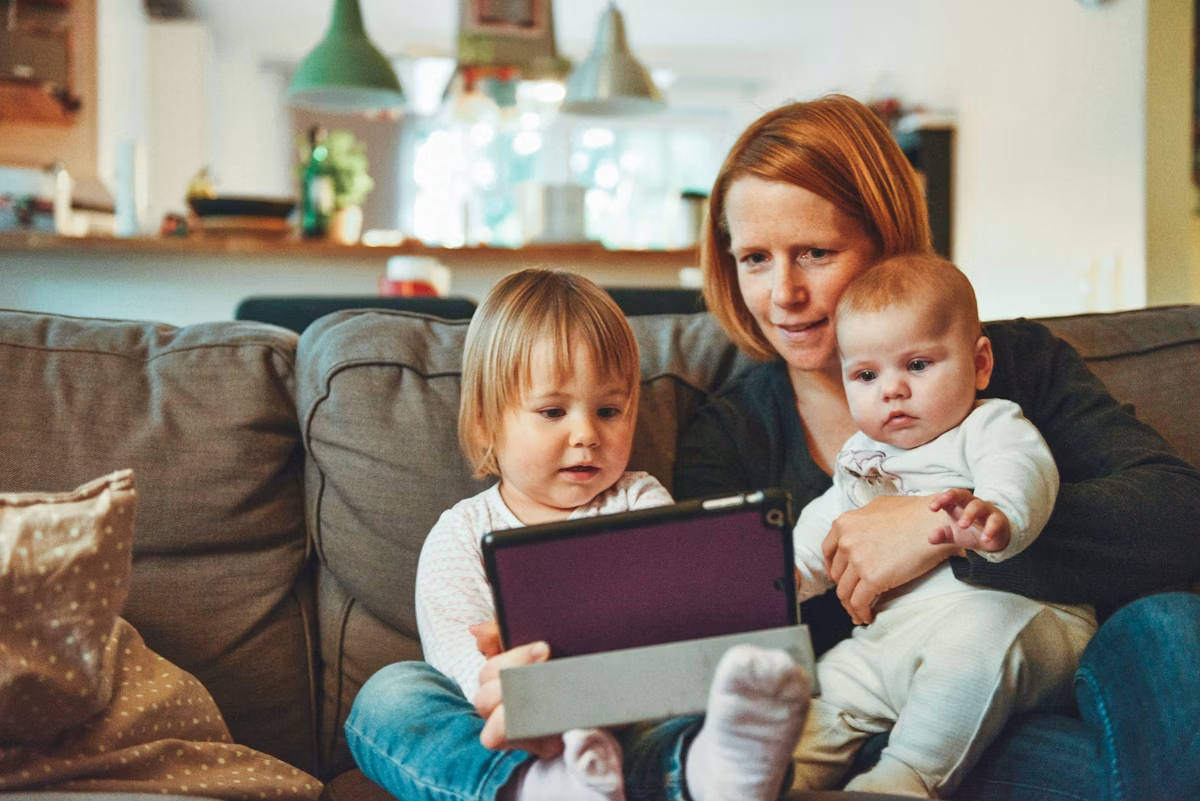
Parenting today often feels like a balancing act between opportunity and overload. Children have access to more educational apps, digital entertainment, structured activities, and information than ever before. At the same time, many parents worry that childhood is becoming too scheduled, too screen-focused, and too disconnected from the simple experiences that once shaped creativity, independence, and confidence.
Playful learning offers a different way forward. It recognizes that children do not need every moment filled with instruction to grow. They need space to explore, make mistakes, build things, ask questions, spend time outdoors, read for pleasure, and take part in ordinary family routines. Intentional parenting supports this by creating an environment where curiosity is welcomed and meaningful experiences are given room to happen.
The goal is not to create the perfect childhood. It is to make everyday life rich enough for children to learn naturally through play, conversation, movement, responsibility, and connection.
Why Play Is Such a Powerful Way to Learn
For children, play is one of the most natural forms of learning. A child building a tower with blocks is experimenting with balance, size, shape, and cause and effect. A group of children inventing a game outdoors is practicing communication, negotiation, imagination, and problem-solving. A child pretending to run a shop may be exploring numbers, language, social roles, and decision-making without realizing that learning is taking place.
This is what makes playful learning so valuable. It allows children to discover ideas through experience instead of receiving every answer in advance. When they build, test, move, imagine, fail, and try again, they become active participants in the learning process.
Parents sometimes feel pressure to turn every activity into a lesson, but children often learn more when adults resist the urge to control the experience. Providing materials, opportunities, and encouragement can be more useful than giving detailed instructions. A cardboard box, a pile of cushions, some building pieces, paper, paint, sticks, stones, or recycled materials can become the starting point for hours of imaginative exploration.
Unstructured Play Gives Children Room to Think
Modern childhood can become heavily organized. School is followed by homework, sports practice, music lessons, tutoring, clubs, and other scheduled activities. These experiences can all be valuable, but children also need periods when nobody has decided exactly what they should be doing.
Unstructured play gives them that freedom. When there is no predetermined goal, children have to decide what interests them, what they want to create, how they will use their time, and what they will do when something goes wrong. Those small decisions help build independence.
Boredom can even play a useful role. Parents may feel they need to solve boredom immediately by offering entertainment, but an empty stretch of time can encourage creativity. A child who initially complains that there is nothing to do may eventually begin drawing, building a fort, making up a story, exploring the garden, or inventing a game.
Children do not need constant stimulation. Sometimes they need enough quiet for their own ideas to appear.
Outdoor Exploration Creates a Different Kind of Classroom
Nature offers children experiences that cannot be fully recreated on a screen or worksheet. Outdoors, the environment constantly changes. The ground may be uneven, the weather shifts, insects appear, leaves have different textures, puddles invite experimentation, and ordinary objects become materials for play.
A walk through a park can turn into a conversation about birds, clouds, plants, shadows, weather, or seasons. Collecting stones can lead to sorting and comparison. Digging in soil can inspire questions about insects and roots. Climbing, balancing, running, and jumping help children understand their bodies while developing coordination and confidence.
Outdoor play also allows children to interact with a world that does not always respond instantly. A tree cannot be swiped away. A garden requires patience. A den may collapse and need rebuilding. These experiences encourage observation, persistence, and adaptability.
Families do not need access to forests or large gardens to make outdoor exploration part of everyday life. A local park, neighborhood walk, balcony garden, beach, courtyard, or even regular visits to the same tree can give children something real to observe and investigate.
Hands-On Building Encourages Problem-Solving
Children often understand ideas more deeply when they can touch, move, combine, and manipulate materials. Building activities are particularly effective because they naturally create problems that children want to solve.
A bridge falls down, so they change the supports. A paper airplane does not travel far, so they adjust the folds. A toy structure is too small, so they rebuild it. A homemade ramp is too steep, so they experiment with the angle.
These moments help children develop a mindset that sees mistakes as information. Failure becomes part of the process instead of something embarrassing to avoid.
Hands-on learning also does not require expensive educational kits. Household materials can provide plenty of opportunities. Cardboard, tape, containers, wooden spoons, paper tubes, fabric scraps, boxes, and safe recycled objects can become construction materials. Older children may enjoy basic woodworking, gardening, cooking, model-making, robotics, crafts, or simple repair projects.
The most important part is giving children the chance to make decisions themselves.
Reading Builds More Than Vocabulary
Reading remains one of the simplest ways to expand a child’s world. Books introduce places, ideas, emotions, characters, cultures, and experiences that may be far beyond a child’s immediate surroundings. Regular reading also develops language, attention, imagination, and the ability to follow longer ideas.
The strongest reading habits often grow from enjoyment instead of pressure. A child who is allowed to choose books based on genuine interest is more likely to see reading as something worth doing. That may mean novels, picture books, comics, biographies, science books, magazines, mythology, graphic novels, or books about a current obsession.
Parents can support reading by making it visible within family life. Children who regularly see adults reading learn that books are part of normal life, not simply another school assignment.
Reading aloud is also valuable beyond the early years. Older children can still enjoy shared stories, and books can become the starting point for meaningful conversations. Asking what a child thinks about a character’s decision or what they imagine might happen next encourages reflection without turning the experience into a test.
Family Meals Can Become Everyday Learning Spaces
Shared meals may seem unrelated to education, but they create opportunities for children to learn in a deeply human way. Around a table, children hear stories, explain their day, listen to other perspectives, ask questions, practice conversation, and develop a sense of belonging.
The meal itself can also become part of learning. Children can help choose recipes, measure ingredients, count portions, wash vegetables, set the table, or prepare simple dishes. Cooking introduces mathematics, science, planning, patience, responsibility, and practical life skills in a natural setting.
Family meals do not need to be elaborate or perfectly calm to matter. The value comes from making space for connection. Even a simple meal shared without constant digital interruptions can create a regular moment when everyone slows down and pays attention to one another.
For busy families, this may not happen every night. A regular breakfast, weekend lunch, or a few shared dinners each week can still become an important family rhythm.
Intentional Parenting Does Not Mean Controlling Everything
The word intentional can sound demanding, especially to parents who already have long lists of responsibilities. Intentional parenting does not mean carefully planning every minute of a child’s development. It means becoming more conscious of the environment and habits that shape family life.
For new parents, read this newborn essentials checklist to help you prepare for those early days with more confidence and less last-minute stress.
Parents can ask simple questions. Does our child have enough time to play freely? Do we talk together without screens nearby? Are there opportunities to contribute at home? Does our child have access to books and creative materials? Do we allow enough independence for age-appropriate mistakes?
Small adjustments can have a large impact. Creating a basket of art supplies, leaving blocks within easy reach, planning a weekly walk, involving children in cooking, or protecting a screen-free part of the evening can gradually change the atmosphere at home.
Intentional parenting is less about adding more activities and more about choosing which experiences deserve space.
Children Need Adults Who Are Curious Too
Children notice how adults respond to the world. A parent who stops to look at an unusual insect, wonders why the moon is visible during the day, tries a new recipe, fixes something instead of immediately replacing it, or admits that they do not know an answer demonstrates curiosity in action.
Parents do not need to know everything. Saying, “I don’t know, but let’s find out,” can be far more powerful than pretending to have every answer. It teaches children that not knowing something is the beginning of learning, not a failure.
Curiosity also grows when children’s questions are taken seriously. Young children may ask dozens of questions that seem simple or repetitive, but those questions reveal an active mind trying to understand how the world works.
Sometimes the best response is another question. Asking, “What do you think?” encourages children to form ideas before receiving an explanation.
Screens Can Have a Place Without Taking Over
Digital technology is part of modern childhood, and treating every screen as harmful is neither realistic nor especially useful. Children can learn, create, communicate, and explore through technology. The challenge is ensuring that screens do not replace too many of the experiences that support physical, social, and imaginative development.
A useful question for parents is not simply how many minutes a child spends on a device, but what that screen time is replacing. If it consistently replaces sleep, outdoor movement, family conversation, reading, creative play, or friendships, the balance may need attention.
Families can create simple boundaries that make sense for their routines. Devices might stay away from the dinner table, bedrooms might have different rules at night, or entertainment screens may come after homework and outdoor play. The details will vary from family to family.
The objective is to help children develop a healthy relationship with technology while still giving them plenty of experience with the physical world.
The Best Learning Often Looks Like Ordinary Childhood
Parents are surrounded by messages suggesting that children need more classes, more programs, more educational products, and more carefully designed activities to succeed. Some of these resources can certainly help, but they are not the whole story.
A child building something on the floor, helping prepare dinner, reading under a blanket, climbing at the park, asking endless questions during a walk, inventing a game with a sibling, or spending an afternoon figuring out what to do is learning in ways that matter.
Playful learning brings attention back to those ordinary experiences. Intentional parenting helps protect them.
Children need guidance, boundaries, encouragement, and opportunities, but they also need room to become themselves. By creating a home life that values curiosity, play, reading, outdoor exploration, practical skills, and genuine family connection, parents can give children something more lasting than another packed schedule.
They can give them the confidence to explore, the freedom to wonder, and the habit of continuing to learn long after childhood ends.
Join the Lifoholic community conversation. We welcome thoughtful insights, questions, and authentic experiences from our readers.
RECOMMENDED DISCUSSIONS
Reader Discussion