
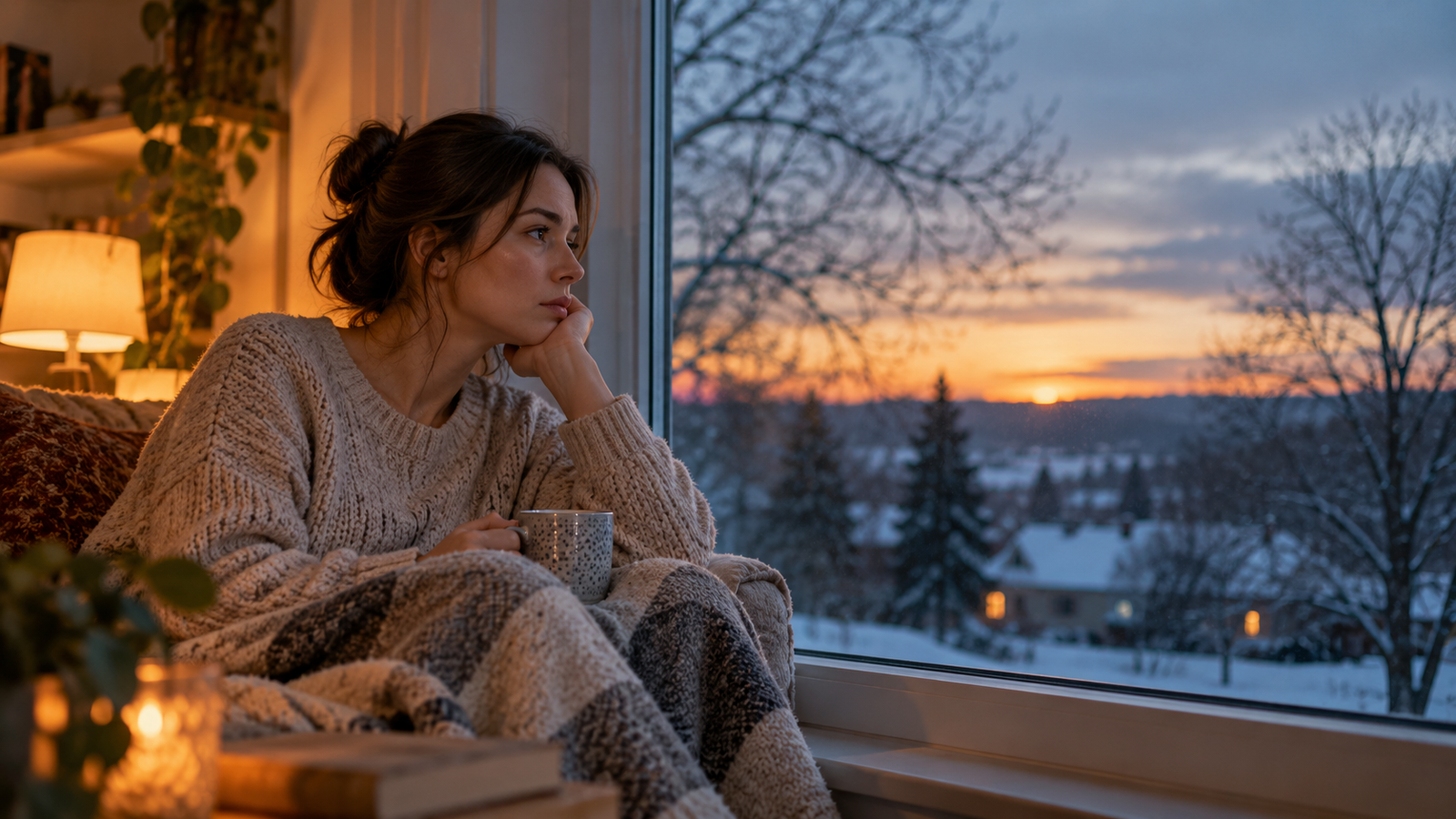
Feeling low as the days get shorter? You’re not imagining it
The clocks are about to change, evenings are getting darker, and getting out of bed feels harder every week. For many people this is a passing dip. For others it is a recognised form of depression called seasonal affective disorder, or SAD.
This Saturday, 10 October, is World Mental Health Day. The 2026 theme, “Lived Experiences Heard: Real Voices, Real Change,” is a good reminder that how you feel is worth taking seriously. This guide helps you tell the difference between ordinary winter blues and SAD, and shows you what actually works.
Quick answer: The winter blues are a mild, short-lived dip in mood and energy that doesn’t stop you living your life. Seasonal affective disorder is a type of depression that returns at the same time each year, usually lasts 4 to 5 months, and affects how you think, feel, sleep and eat. If low mood lasts most of the day, nearly every day, for two weeks or more, talk to a doctor.
SAD vs. winter blues: the key differences
The biggest difference is impact. The winter blues make life feel a little greyer. SAD makes ordinary life hard to manage.
| Winter blues | Seasonal affective disorder (SAD) | |
| What it is | A common, mild dip in mood | A recognised type of depression with a seasonal pattern |
| How long it lasts | Comes and goes, often for days | Most of the day, nearly every day, often for 4 to 5 months |
| Effect on daily life | You still work, socialise and enjoy things | Work, relationships and hobbies start to suffer |
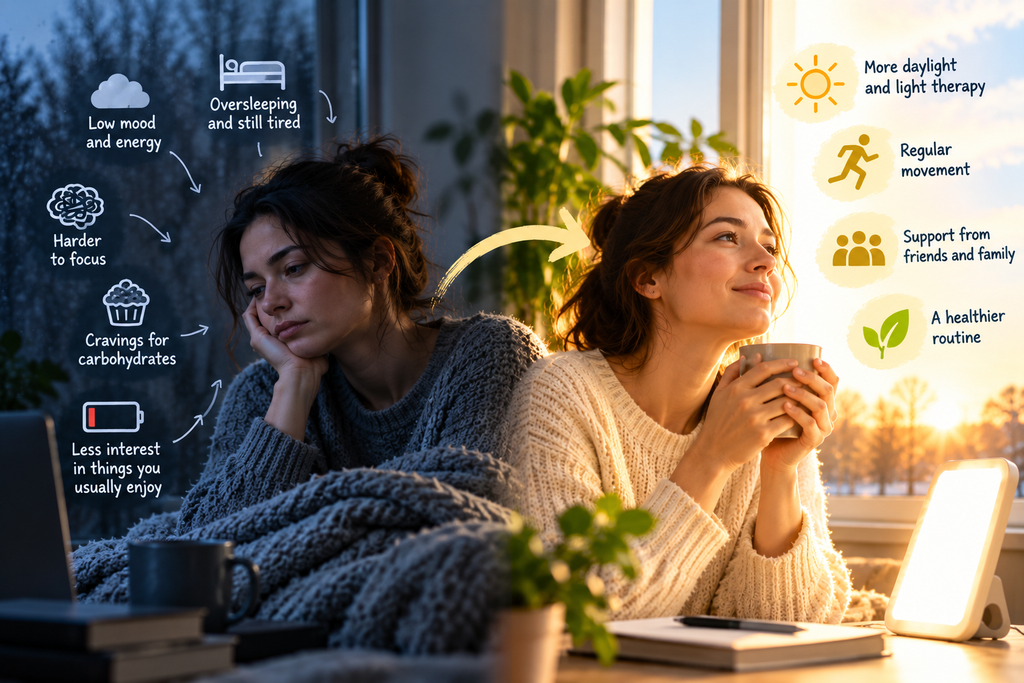
| Sleep | Slightly more tired than usual | Oversleeping and still feeling exhausted |
| Appetite | Normal or slightly more snacking | Strong cravings for carbohydrates, weight gain |
| Pattern | Random, tied to weather or a busy month | Returns at the same time for at least 2 years in a row |
| What helps | Light, movement, routine, people | The same habits, plus light therapy, talk therapy or medication |
One more distinction: the “holiday blues” are not SAD. Holiday stress is tied to the calendar, such as family visits and deadlines. SAD is tied to daylight hours.
Symptoms of seasonal affective disorder
SAD shares the core symptoms of depression, plus a few that are typical of the season. Not everyone has all of them.
Core symptoms of depression
- A sad, anxious or “empty” mood most of the day, nearly every day, for at least 2 weeks
- Losing interest or pleasure in things you usually enjoy
- Low energy, fatigue, or feeling slowed down
- Trouble concentrating, remembering or making decisions
- Feeling hopeless, guilty or worthless
- Irritability or restlessness
- Aches, headaches or stomach problems with no clear physical cause
- Thoughts of death or suicide
Extra signs of winter-pattern SAD
- Oversleeping, yet still feeling tired
- Craving carbohydrates and gaining weight
- Pulling away from people, often described as wanting to “hibernate”
Summer-pattern SAD exists too. It is less common, and its signs are the opposite: poor sleep, poor appetite, weight loss, restlessness and anxiety.
A quick self-check
Ask yourself these questions. If you answer “yes” to several, it is worth speaking to a doctor.
- Did I feel this way at the same time last year, and the year before?
- Has my low mood lasted more than two weeks?
- Am I sleeping much more but waking up exhausted?
- Have I stopped enjoying things I normally love?
- Is it affecting my work, studies or relationships?
- Do I feel noticeably better in spring?
This checklist is not a diagnosis. A doctor or mental health professional will usually look for depressive episodes in the same season for at least two years in a row.
Why shorter days affect your mood
Researchers are still working out the full picture, but four connected factors stand out. They all come back to one thing: less daylight.
- Serotonin drops. Serotonin is a brain chemical that helps regulate mood. People with winter-pattern SAD tend to have lower serotonin activity, and sunlight appears to help keep it at normal levels.
- Melatonin rises. Melatonin is the hormone that makes you sleepy when it gets dark. Longer nights can mean too much of it, which explains the oversleeping and daytime grogginess.
- Your body clock drifts. Serotonin and melatonin together keep your daily rhythm in step with day and night. When both shift, your internal clock struggles to adjust to the shorter days, and sleep, mood and appetite follow.
- Vitamin D falls. Your skin makes vitamin D in sunlight, and vitamin D is believed to support serotonin activity. Less winter sun can mean lower levels, which may make symptoms worse.
Your thoughts matter too. Dreading the dark months is common, and those negative expectations can deepen a low mood. That is why talk therapy, covered below, works well for SAD.
Who is most at risk?
Anyone can develop SAD, but some people are more likely to.
- Women. SAD is much more common in women than in men.
- Young adults. It usually first appears in young adulthood.
- People far from the equator. Winter days are shortest at high latitudes. In the US, for example, SAD is more common in Alaska and New England than in Texas or Florida. The same logic applies to Canada, the UK, Scandinavia and northern Europe.
- People with depression or bipolar disorder, especially bipolar II.
- People with ADHD, anxiety, panic disorder or eating disorders, which often occur alongside SAD.
- People with a family history of SAD, depression or other mental illness.
Living in the tropics or the Southern Hemisphere? Winter-pattern SAD is rarer near the equator, but summer-pattern SAD and general seasonal mood dips still happen. In Australia, New Zealand and South Africa, the darker months run from about June to August, so this guide applies to you then.
12 science-backed ways to feel better this winter
The first eight help with both the winter blues and mild SAD. The last four are treatments to discuss with a doctor if self-help isn’t enough.
Daily habits
- Get outside in the morning. Daylight is the most direct fix for a light problem. Even on a cloudy day, outdoor light is far brighter than indoor light. A 20-minute walk soon after waking helps reset your body clock.
- Bring more light indoors. Move your desk or reading chair next to a window. Open the curtains as soon as you wake up, and keep the blinds open during the day.
- Keep a fixed sleep schedule. Go to bed and wake up at the same time every day, including weekends. This is especially important around the clock change, when your rhythm is easiest to knock off balance.
- Move your body. Regular exercise lifts mood and energy. Exercising outdoors in daylight gives you a double benefit.
- Stay in touch with people. SAD pushes you to hibernate, so push back gently. A phone call, a coffee with a friend or a weekly class all count.
- Plan things to look forward to. Therapists call this “behavioural activation.” Schedule small, enjoyable activities in your calendar, indoors and outdoors, so your week has bright spots built in.
- Eat for steady energy. Carbohydrate cravings are a classic SAD symptom. Balance comfort foods with protein, vegetables and whole grains so your energy doesn’t crash.
- Cut back on alcohol and late-night screens. Alcohol worsens mood and sleep. Using your phone right before bed can delay sleep and throw off your body clock further.
Treatments to discuss with a doctor
- Light therapy. A light box gives off bright light, typically 10,000 lux, to make up for missing daylight. The usual approach is 30 to 45 minutes each morning from autumn to spring. Choose a UV-free lamp from a reputable brand, and check with a doctor first if you have an eye condition or take medicines that increase light sensitivity. US guidance treats light therapy as a mainstay of treatment, while the UK’s NHS notes the evidence is still limited, though many people find it helps.
- Talk therapy (CBT). Cognitive behavioural therapy has a version adapted for SAD, called CBT-SAD. It typically runs as two group sessions a week for six weeks. In studies it worked as well as light therapy, and its benefits seemed to last longer into the following winter.
- Antidepressants. Medication can help, on its own or with therapy. It usually takes 4 to 8 weeks to work. In the US, an extended-release form of bupropion is approved to help prevent seasonal depression when taken from autumn to early spring.
- Check your vitamin D. Many people with winter-pattern SAD are low in vitamin D. A simple blood test can tell you. Studies on supplements for SAD are mixed, so ask a doctor before taking high doses, as vitamin D can interact with some medicines.
Prevention tip: If SAD hits you every year, start these habits and treatments before the dark months begin, not after you already feel low. Because SAD is so predictable, getting ahead of it is one of the most effective things you can do.
When to see a doctor
See a doctor or mental health professional if:
- Your low mood has lasted most of the day, nearly every day, for two weeks or more
- It is affecting your work, studies, sleep or relationships
- Self-help hasn’t made a difference after a few weeks
- You’ve already been diagnosed with SAD and your treatment isn’t working
- You’re relying on alcohol, food or other substances to cope
There’s no need to wait until things feel unbearable. SAD responds well to treatment, and many people use the same plan each winter to stay well.
If you’re in crisis
If you are having thoughts of suicide or self-harm, please reach out now. You don’t have to go through this alone.
| Country | Who to contact |
| United States | Call or text 988 (Suicide and Crisis Lifeline) |
| Canada | Call or text 9-8-8 |
| United Kingdom and Ireland | Samaritans, 116 123 |
| Australia | Lifeline, 13 11 14 |
| India | Tele-MANAS, 14416 |
| Anywhere else | Find a free helpline near you at findahelpline.com |
In an emergency, call your local emergency number.
Frequently asked questions
Is seasonal affective disorder a real condition?
Yes. SAD is a recognised type of depression with a seasonal pattern. Doctors diagnose it when depressive episodes happen in the same season for at least two years in a row.
When does SAD usually start and end?
Winter-pattern SAD usually starts in late autumn or early winter and lifts in spring. Symptoms typically last about 4 to 5 months.
Can you get SAD in summer?
Yes, though it is less common. Summer-pattern SAD tends to cause poor sleep, poor appetite, weight loss, restlessness and anxiety.
Do SAD lamps actually work?
Many people find them helpful, and light therapy has been used for winter-pattern SAD since the 1980s. The standard is 10,000 lux for 30 to 45 minutes in the morning. Evidence quality is still debated, so check with a doctor first, especially if you have an eye condition.
Does vitamin D help with SAD?
It might. Many people with SAD have low vitamin D, but studies on supplements show mixed results. A blood test will tell you whether you’re actually low.
Does the clock change make SAD worse?
It can make things harder. Darker evenings arrive suddenly, and the shift can disrupt your sleep rhythm. Keeping a fixed sleep schedule and getting morning light helps you adjust.
How do I help a friend or partner with SAD?
Invite them outdoors, keep plans small and low-pressure, and listen without trying to fix everything. If their mood keeps sinking, gently encourage them to see a doctor.
References
- National Institute of Mental Health (NIMH), Seasonal Affective Disorder, revised 2023
- NHS, Seasonal affective disorder (SAD), reviewed December 2025
- World Federation for Mental Health, World Mental Health Day 2026 theme
This article is for general information and is not a substitute for professional medical advice. Always speak to a qualified health professional about your symptoms and treatment.

Join the Lifoholic community conversation. We welcome thoughtful insights, questions, and authentic experiences from our readers.
RECOMMENDED DISCUSSIONS
The Science of Restorative Sleep: Optimizing Nighttime Routines
Morning Rituals That Set a Positive Tone for the Day